
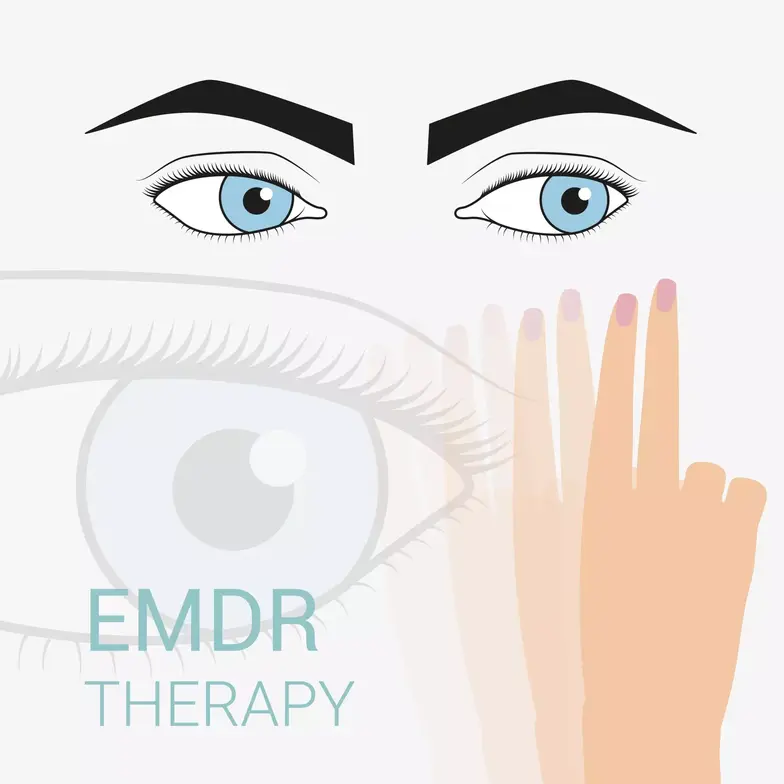
Eye Movement Desensitization and Reprocessing (EMDR) is a psychotherapy approach developed by Francine Shapiro in the late 1980s to help individuals process traumatic memories and emotional distress. EMDR is commonly used to treat post-traumatic stress disorder (PTSD), anxiety, depression, panic attacks, grief, and other mental health concerns connected to disturbing life experiences. The therapy is based on the idea that traumatic memories can become “stuck” in the brain, causing ongoing emotional and physical reactions. EMDR helps the brain reprocess these memories in a healthier way so they no longer feel as overwhelming.
During EMDR therapy, the client briefly focuses on a traumatic memory while simultaneously engaging in bilateral stimulation, such as guided eye movements, tapping, or listening to alternating sounds. This process helps reduce the emotional intensity connected to painful memories and allows new, healthier beliefs to develop. EMDR follows an eight-phase treatment process that includes history taking, preparation, assessment, desensitization, installation of positive beliefs, body scan, closure, and reevaluation.
One major benefit of EMDR is that it does not require clients to discuss traumatic experiences in extensive detail. This can make therapy feel safer and less overwhelming for some individuals. EMDR has also been shown to work more quickly than some traditional talk therapies for trauma-related conditions. Many clients report reduced anxiety, fewer flashbacks, improved self-esteem, better emotional regulation, and healthier relationships after treatment.
Research supports EMDR as an effective, evidence-based therapy for trauma and PTSD. Organizations such as the American Psychological Association and the World Health Organization recognize EMDR as a valid treatment approach. Overall, EMDR offers individuals a structured and effective method for healing from painful experiences and improving emotional well-being.

Deborah McCracken
Contact Me
